
Thank you for coming back for A Closser Look’s second blog, Like A Tree! Last time we discussed the beautiful picture of the sun and the moon in relation to the death, burial, and resurrection of Jesus Christ. Today, I’d like to introduce a close friend, or admirer of the sun: trees! The term “tree” is mentioned 169 times in Scripture, “trees” 136 times, and they appear together 18 more times. Interestingly enough, in accordance with the law of first mention, we see the first appearance of trees in the beginning of Genesis, “And God said, Let the earth bring forth grass, the herb yielding seed, and the fruit tree yielding fruit after his kind, whose seed is in itself, upon the earth: and it was so. 12 And the earth brought forth grass, and herb yielding seed after his kind, and the tree yielding fruit, whose seed was in itself, after his kind: and God saw that it was good (1:11-12).” We see it in the first Psalm, in the middle of the Bible,”And he shall be like a tree planted by the rivers of water, that bringeth forth his fruit in his season; his leaf also shall not wither; and whatsoever he doeth shall prosper (1:3),” and finally in the last book of the Bible, Revelation 22:2, “In the midst of the street of it, and on either side of the river, was there the tree of life, which bare twelve manner of fruits, and yielded her fruit every month: and the leaves of the tree were for the healing of the nations,” and everywhere in the pages between. God doesn’t mince words, exaggerate phrases, omit punctuation, or add any thing unnecessarily to His Word. With that in mind, we can say with assurance that God must have much in store for these mere trees. Let’s take A Closser Look!
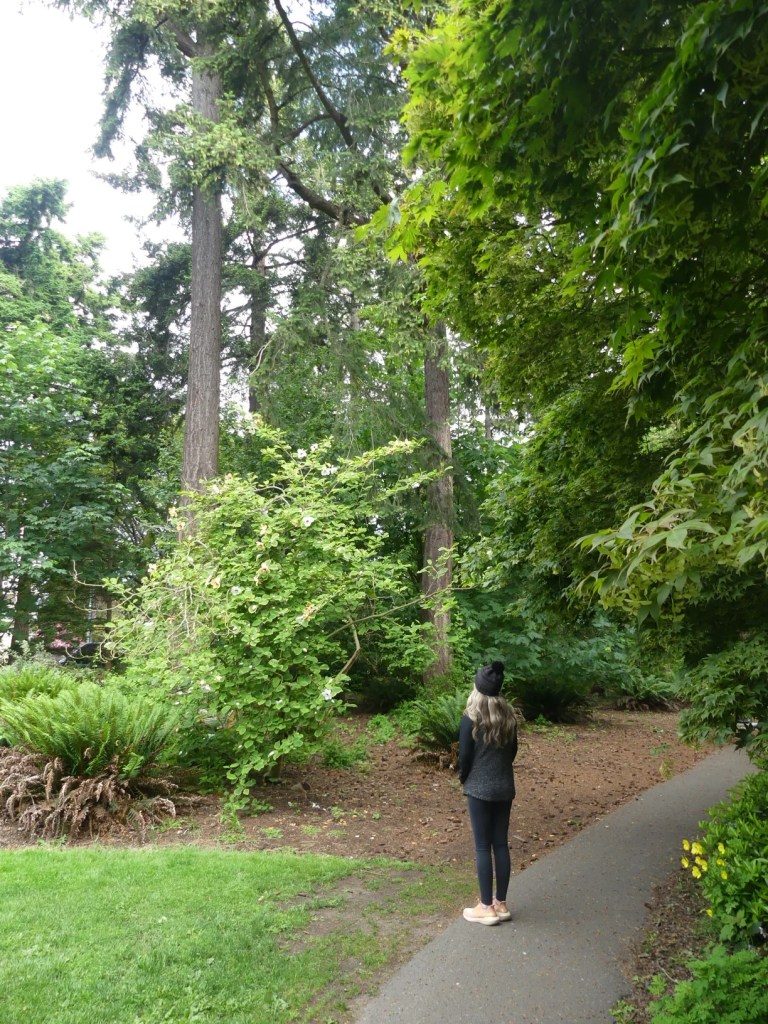
Pictured: Beacon Hill Park, Victoria, British Columbia
Introduction
Trees have been since the beginning and will be for all of eternity. Trees last years upon years longer than the average man, some dating back to the times of Moses! It’s interesting that when you look at trees in the Bible they’re often portrayed as communicating things. In Isaiah 55:12, we see them clap their hands, in 1 Chronicles 16:33, we see them shout for joy, and in Judges 9:7-15, we even see them exchanging words back and forth between each other. What makes this especially interesting is that other creatures, such as the fish of the sea and birds in the air, known communicative creatures, are mute in the Bible. When God speaks in His word, every word is important and necessary. With that in mind, if trees are often found communicating, they must have a message to say from their Creator to His creation.
“For ye shall go out with joy, and be led forth with peace: the mountains and the hills shall break forth before you into singing, and all the trees of the field shall clap their hands.” Isaiah 55:12
“Then shall the trees of the wood sing out at the presence of the Lord, because he cometh to judge the earth.”1 Chronicles 16:33
“And when they told it to Jotham, he went and stood in the top of mount Gerizim, and lifted up his voice, and cried, and said unto them, Hearken unto me, ye men of Shechem, that God may hearken unto you. 8 The trees went forth on a time to anoint a king over them; and they said unto the olive tree, Reign thou over us. 9 But the olive tree said unto them, Should I leave my fatness, wherewith by me they honour God and man, and go to be promoted over the trees? 10 And the trees said to the fig tree, Come thou, and reign over us. 11 But the fig tree said unto them, Should I forsake my sweetness, and my good fruit, and go to be promoted over the trees? 12 Then said the trees unto the vine, Come thou, and reign over us. 13 And the vine said unto them, Should I leave my wine, which cheereth God and man, and go to be promoted over the trees? 14 Then said all the trees unto the bramble, Come thou, and reign over us. 15 And the bramble said unto the trees, If in truth ye anoint me king over you, then come and put your trust in my shadow: and if not, let fire come out of the bramble, and devour the cedars of Lebanon. Judges 9:7-15
Pictured: Hawksbill Peak Trail, Shenandoah National Park
Historical Note: Trees in Christianity
In the mid-to-late 1800s, one of the greatest of great preachers, Charles Spurgeon, entitled many of his sermons after trees: “Christ, the Tree of Life,” “The Tree in God’s Court,” “The Cedars of Lebanon,” “The Beauty of the Olive Tree,” “The Sound in the Mulberry Trees,” and “The Leafless Tree,” to name a few. He must’ve realized the sure, forest of trees found in Scripture! Unfortunately, as time has progressed, trees have been left. It’s not surprising that in today’s 21st century Christianity, trees are often forgotten in sermons and taken out of modern Bible translations as unimportant. The problem with this is that trees have had an ordained message from their Creator since the beginning to the world.
In the Beginning
In Genesis 2, God formed man, Adam, by blowing the breath of life into his nostrils. He also created the woman, Eve, to be a helpmeet for Adam. God commissioned them to “multiply and replenish the earth,” and specifically “dress” and “keep” the trees in the garden (Genesis 2:15). The trees were ordained with very specific tasks of providing air to breathe (Genesis 1:29), providing shelter (Genesis 2:8), and providing food to sustain them (Genesis 2:16). The garden had two main trees: the Tree of Knowledge of Good and Evil and the Tree of Life (Genesis 2:9). Just as Satan has subtly clear cut trees from today’s messages, he crept behind the trees in the garden and got Adam and Eve to bark up the wrong tree.
“And the Lord God formed man of the dust of the ground, and breathed into his nostrils the breath of life; and man became a living soul.” Genesis 2:7
“And the Lord God took the man, and put him into the garden of Eden to dress it and to keep it.” Genesis 2:15
“And God said, Behold, I have given you every herb bearing seed, which is upon the face of all the earth, and every tree, in the which is the fruit of a tree yielding seed; to you it shall be for meat.” Genesis 1:29
“And the Lord God planted a garden eastward in Eden; and there he put the man whom he had formed.” Genesis 2:8
“And the Lord God commanded the man, saying, Of every tree of the garden thou mayest freely eat:” Genesis 2:16
“And out of the ground made the Lord God to grow every tree that is pleasant to the sight, and good for food; the tree of life also in the midst of the garden, and the tree of knowledge of good and evil.” Genesis 2:9
The Tree of Knowledge of Good and Evil
“And the Lord God commanded the man, saying, Of every tree of the garden thou mayest freely eat: 17 But of the tree of the knowledge of good and evil, thou shalt not eat of it: for in the day that thou eatest thereof thou shalt surely die.” Genesis 2:16-17
God had one simple command for Adam and Eve; do not eat of the Tree of Knowledge of Good and Evil! They were free to eat from all the other trees in the garden, including the Tree of Life, which we’ll discuss more later. Yet, the one tree the Lord put off limits, was just too pleasing to the eyes. Unfortunately, it would not be pleasing for their spirits or to God. In verse 17, the Lord didn’t mean they would die physically from eating of the tree, but that they would die spiritually. The perfect fellowship they had with their Creator, walking and talking together with Him, would be broken (Genesis 3:8).
“And they heard the voice of the Lord God walking in the garden in the cool of the day: and Adam and his wife hid themselves from the presence of the Lord God amongst the trees of the garden.” Genesis 3:8
“Now the serpent was more subtil than any beast of the field which the Lord God had made. And he said unto the woman, Yea, hath God said, Ye shall not eat of every tree of the garden? 2 And the woman said unto the serpent, We may eat of the fruit of the trees of the garden: 3 But of the fruit of the tree which is in the midst of the garden, God hath said, Ye shall not eat of it, neither shall ye touch it, lest ye die. 4 And the serpent said unto the woman, Ye shall not surely die: 5 For God doth know that in the day ye eat thereof, then your eyes shall be opened, and ye shall be as gods, knowing good and evil. 6 And when the woman saw that the tree was good for food, and that it was pleasant to the eyes, and a tree to be desired to make one wise, she took of the fruit thereof, and did eat, and gave also unto her husband with her; and he did eat.” Genesis 3:1-7
The Tree of Life
2 To see thy power and thy glory, so as I have seen thee in the sanctuary.”
Ponder, that in a dry and barren field such as this one (the world), the Lord offered us sanctuary (salvation/eternal life) through the Tree of Life (Jesus Christ).
Pictured: Big Meadows, Shenandoah National Park
“Unto Adam also and to his wife did the Lord God make coats of skins, and clothed them. 22 And the Lord God said, Behold, the man is become as one of us, to know good and evil: and now, lest he put forth his hand, and take also of the tree of life, and eat, and live for ever: 23 Therefore the Lord God sent him forth from the garden of Eden, to till the ground from whence he was taken. 24 So he drove out the man; and he placed at the east of the garden of Eden Cherubims, and a flaming sword which turned every way, to keep the way of the tree of life.” Genesis 3:21-24
Despite everything Adam and Eve did (eating the Tree of Knowledge of Good and Evil, disobeying God, hiding from God, blaming each other, breaking the perfect fellowship they had with Him from the beginning) the Lord sacrificed an animal and made coats of skins to cover them. Sound familiar? The Lord’s sacrifice on the wooden cross of Calvary for our sins, despite what we had done, and having done nothing to earn it. Adam and Eve walked and talked with God in the garden.. They had an intimate relationship with Him. They partook of the Tree of Life, everyday of their life! Yet, the world (sin) and the wrong tree caught their attention, but God, in His mercy, said, “I forgive you,” “I’ll make a way,” “I am THE WAY”!
Biblical Examples: How Trees Have Made A Way
Without trees, the waters of Marah would have remained bitter, not sweetened (Exodus 15:25), David would have missed his call to battle (1 Chronicles 14:15), and God wouldn’t have called his people to be trees of righteousness (Isaiah 61:3), but most importantly, Jesus couldn’t have bore the ultimate sacrifice on a wooden cross that made a way for you and me (1 Peter 2:24).
“And he cried unto the Lord; and the Lord shewed him a tree, which when he had cast into the waters, the waters were made sweet: there he made for them a statute and an ordinance, and there he proved them,” Exodus 15:25
“And it shall be, when thou shalt hear a sound of going in the tops of the mulberry trees, that then thou shalt go out to battle: for God is gone forth before thee to smite the host of the Philistines.” 1 Chronicles 14:15
“To appoint unto them that mourn in Zion, to give unto them beauty for ashes, the oil of joy for mourning, the garment of praise for the spirit of heaviness; that they might be called trees of righteousness, the planting of the Lord, that he might be glorified.” Isaiah 61:3
“Who his own self bare our sins in his own body on the tree, that we, being dead to sins, should live unto righteousness: by whose stripes ye were healed.” 1 Peter 2:24
Research Note: How Seeds Become a Tree
Think about how many seeds a tree puts out. Research shows that it can be anywhere from one to four million. However, not all seeds plant themselves. Some get dispersed by the wind, drop into the water, or even eaten by animals. Once a seed has found the right spot, the first root breaks through the seed, anchoring it. Next, it begins to take in water encouraging the shoot to push up through the ground. A shoot becomes a seedling when it is above ground. Once it reaches above 3ft tall it is considered a sapling. Finally, a tree becomes mature when it is producing fruit or flowers. Ancient trees have lived longer than one hundred years! A snag is a dying or dead tree, no longer able to produce fruit or flowers.
Application: Like A Tree
“And he shall be like a tree planted by the rivers of water, that bringeth forth his fruit in his season; his leaf also shall not wither; and whatsoever he doeth shall prosper.” Psalm 1:3
We can learn a lot from the life of a tree, from just a mere seed to a mighty, mature tree! We may plant hundreds of seeds and not see the fruit of one. It only takes one to catch root. It only takes one more conversation. Satan will try everything in his power to blow the seed into the wind, or drown it, or send an attack animal to devour it, but God is faithful! When a seed does catch root, and it will, you may get the privilege to water it with the word of God, as the Sun shines down on it! Eventually, you have a mature tree in the LORD – planted by the rivers of water, bringing forth more and more fruit!
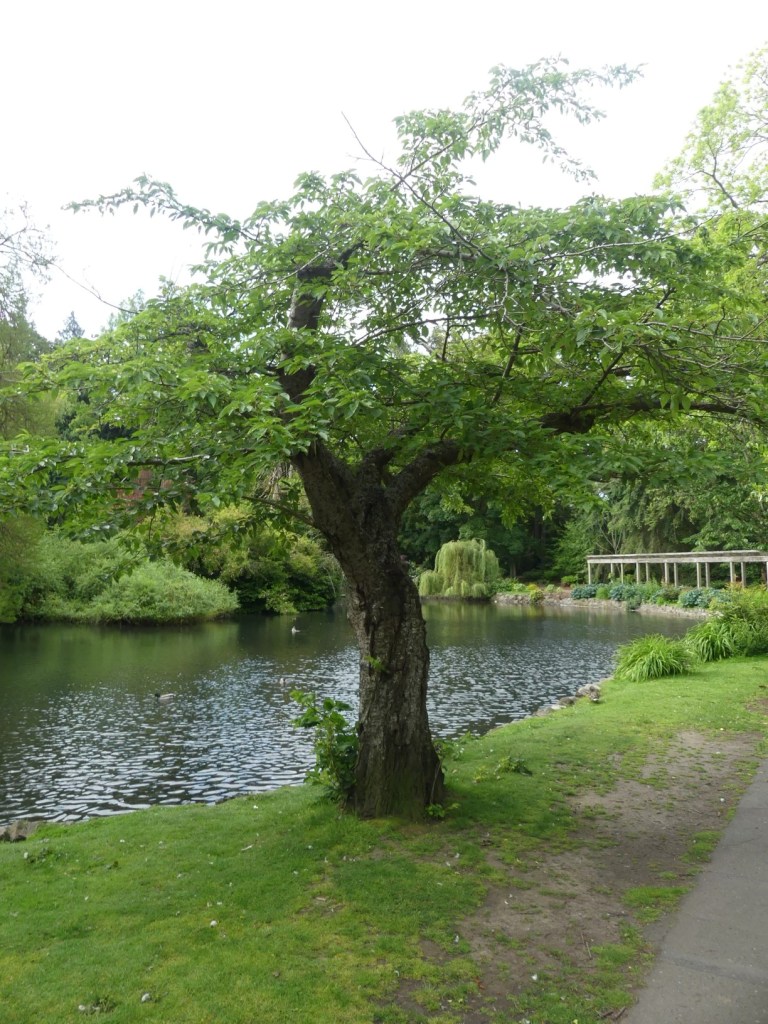
Pictured: Beacon Hill Park, Victoria, British Columbia
Note: A snag (a dead tree) can not produce fruit or flowers.
“Beware of false prophets, which come to you in sheep’s clothing, but inwardly they are ravening wolves. (remember, some of those millions of seeds could get eaten by animals!) 16 Ye shall know them by their fruits. Do men gather grapes of thorns, or figs of thistles? 17 Even so every good tree bringeth forth good fruit; but a corrupt tree bringeth forth evil fruit. 18 A good tree cannot bring forth evil fruit, neither can a corrupt tree bring forth good fruit. 19 Every tree that bringeth not forth good fruit is hewn down, and cast into the fire. 20 Wherefore by their fruits ye shall know them.” Matthew 7:15-20

Pictured: Uprooted, dead tree; Congaree National Park
“That Christ may dwell in your hearts by faith; that ye, being rooted and grounded in love, 18 May be able to comprehend with all saints what is the breadth, and length, and depth, and height; 19 And to know the love of Christ, which passeth knowledge, that ye might be filled with all the fulness of God.” Ephesians 3:17-19
Conclusion
Sometimes you may plant seeds behind the scenes in obscurity.
Plant anyway.
Trust that God sees your efforts and that your actions are not unnoticed. Even if you don’t receive recognition in this lifetime, the seeds you plant will bear fruit in due time. Keep your focus on building the Kingdom of God, not the kingdoms of this world. Know that even if no one else sees it, or “nothing” comes from it, God sees it and is still working through you as opportunities and doors present themselves to plant, again.
“Though I do not believe that a plant will spring up where no seed has
– HENREY DAVID THOREAU, Faith in a seed
been, I have great faith in a seed. Convince me that you have a seed
there, and I am prepared to expect wonders.”
R.C

 A Closser Look
Leave a comment