
Welcome back! For A Closser Look’s next blog, Tree Archives, I thought we would discuss the specific trees mentioned in the Bible. In addition to Like A Tree, I hope this can further your Biblical knowledge of trees as they are specifically mentioned by name in the Bible. While there is a forest of trees mentioned, we will focus primarily on the most prominent ones: the Olive, Fig, Cedar and Palm trees. We will look at some of the other trees mentioned to make sure you have a starting point to further study out all of these giants of the faith! Let’s take A Closser Look!
The Olive Tree
The olive tree is often associated with beauty and prosperity in the Bible. We first see it mentioned in Genesis 8:11, as a dove delivered an olive branch to Noah so that he would know the waters had ceased to rise any longer. In Psalm 52:8 and Jeremiah 11:16, we see a green olive tree is associated with “trusting the Lord’s mercy” and considered to be “fair and of goodly fruit”. Hosea 14:6 says, “his beauty shall be as the olive tree,” referring to just one of the promises of God, to the just that walk in the ways of the Lord (14:9).
Romans 8:11 “And the dove came in to him in the evening; and, lo, in her mouth [was] an olive leaf plucked off: so Noah knew that the waters were abated from off the earth.”
Psalm 52:8 “But I [am] like a green olive tree in the house of God: I trust in the mercy of God for ever and ever.”
Jeremiah 11:16 “The LORD called thy name, A green olive tree, fair, [and] of goodly fruit: with the noise of a great tumult he hath kindled fire upon it, and the branches of it are broken.”
Hosea 14:6,9 “His branches shall spread, and his beauty shall be as the olive tree, and his smell as Lebanon.”
“9 Who is wise, and he shall understand these things? prudent, and he shall know them? for the ways of the Lord are right, and the just shall walk in them: but the transgressors shall fall therein.”
In Romans 11:17-27, we’re presented with the parable of the “Two Olive Trees”: the Good and Wild. The Good Olive Tree represents Israel and the Wild Olive Tree the Gentiles. Paul is beginning to explain the process of grafting shoots of a wild olive into that of a good olive, which has been unfruitful. Israel is described as a green olive tree with goodly fruit, but is forewarned time and time again that their idolatry could lead to them being broken off.

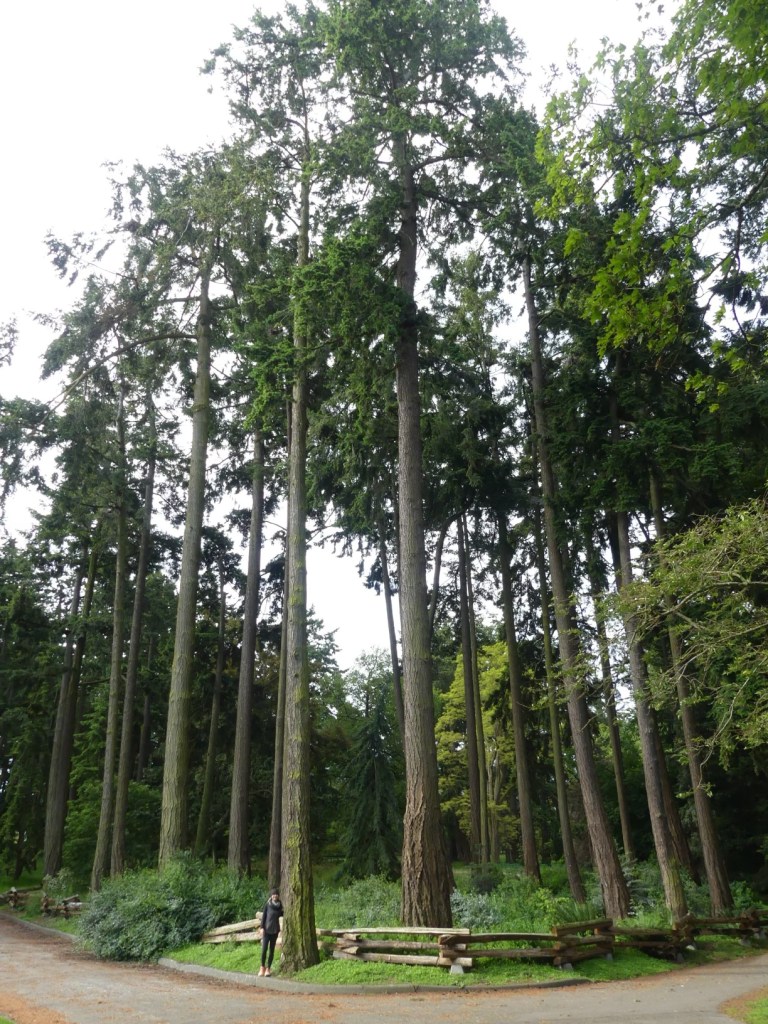
Beacon Hill Park, Victoria, BC – A tree; “broken off”/ dead and fruitless
Biblical Note: The Trinity in the Roots
It’s interesting to note that the root of the Good Olive Tree (Israel) is holy (Romans 11:16). God calls us to be holy, as he is holy (1 Peter 1:16)! In Exodus 3:13-15, Moses asks God, “when I come unto the children of Israel, and shall say unto them, The God of your fathers hath sent me unto you; and they shall say to me, What is his name? what shall I say unto them (3:13)?” Essentially, “Who should I say sent me?” God says, “say that I AM THAT I AM has sent me (3:14)!” Furthermore, if that doesn’t get attention, God reveals himself as the Tri-une God in the next verse, “Thus shalt thou say unto the children of Israel, the Lord God of your fathers, the God of Abraham, the God of Isaac, and the God of Jacob, hath sent me unto you: this is my name for ever, and this is my memorial unto all generations (3:15)” In Scripture, Abraham is a type of God the Father, Isaac is a type of God the Son, and the Jacob is seen as a type of the Holy Spirit.
Romans 11:16 “For if the firstfruit be holy, the lump is also holy: and if the root be holy, so are the branches.”
1 Peter 1:16 “Because it is written, Be ye holy; for I am holy.”
Despite God’s desire for His people to be holy, they committed idolatry against Him. In result, some of the branches would be broken off (Romans 11:16-17). It’s important to understand that the branches were not broken off to graft the Wild Olive (Gentiles) in, but rather because of Israel’s unbelief (11:20). The Gentiles were not grafted in to replace the branches that had been broken off, but rather to be a partaker of the “root and fatness” of the Good Olive Tree (11:17). The Wild Olive Branches that are grafted in represent the Church. There are many that claim that the Wild Olive Branches, the church, have taken the place of the Good Olive Branches that have been broken off, Israel. However, the Bible is clear in that Israel will be restored back to fellowship with God after the falling away of the Gentiles (2 Thessalonians 2:3).
2 Thessalonians 2:3 “Let no man deceive you by any means: for that day shall not come, except there come a falling away first, and that man of sin be revealed, the son of perdition;”
The Mystery of Israel’s Restoration
Romans 11:16-27 “For if the firstfruit be holy, the lump is also holy: and if the root be holy, so are the branches. 17 And if some of the branches be broken off, and thou, being a wild olive tree, wert grafted in among them, and with them partakest of the root and fatness of the olive tree; 18 Boast not against the branches. But if thou boast, thou bearest not the root, but the root thee. 19 Thou wilt say then, The branches were broken off, that I might be grafted in. 20 Well; because of unbelief they were broken off, and thou standest by faith. Be not highminded, but fear: 21 For if God spared not the natural branches, take heed lest he also spare not thee. 22 Behold therefore the goodness and severity of God: on them which fell, severity; but toward thee, goodness, if thou continue in his goodness: otherwise thou also shalt be cut off. 23And they also, if they abide not still in unbelief, shall be grafted in: for God is able to graft them in again.24 For if thou wert cut out of the olive tree which is wild by nature, and wert grafted contrary to nature into a good olive tree: how much more shall these, which be the natural branches, be grafted into their own olive tree? 25 For I would not, brethren, that ye should be ignorant of this mystery, lest ye should be wise in your own conceits; that blindness in part is happened to Israel, until the fulness of the Gentiles be come in. 26 And so all Israel shall be saved: as it is written, There shall come out of Sion the Deliverer, and shall turn away ungodliness from Jacob: 27 For this is my covenant unto them, when I shall take away their sins.”
Research Note: Replacement Theology
Replacement theology is to assume that the Church has superseded the Jews and the Nation of Israel, assuming their role as God’s chosen people and that all of the promises given to them, are now given to the Church instead.
Note: Replacement theology takes many verses out of context in order to defend this point of view as is the standard for operation in all false teachings.
Verses of Defense: Acts 1:6-8, Romans 11:16-27, Daniel 9
In Romans 11:25-27, Paul uses a parable to explain the current status of Israel and the Church. Israel is in a state of spiritual blindness; but God isn’t finished. When the fullness of the Gentiles has come in, Israel will turn from their gods and call upon the Lord as their Messiah! Paul previously stated that a remnant of Israel will be saved (Romans 9:27) and God’s covenants with her will be fulfilled (Romans 11:27). In this Laodicean Church Age (the last of the 7 church ages), we are witnessing firsthand the acts of the church leading to the cutting off (Revelation 3). Blindness will soon be removed from Israel, and the “natural branches” will be grafted back in.
The Fig Tree
Biblical Note: The Tribes Split
In 1 Kings 11:26-40, the prophet Ahijah tears a garment into twelve pieces and instructs the king to pick up ten of them, foreshadowing the division of the Israelites into the ten northern tribes (Israel) and the two southern tribes (Judah). The Fig Tree is representative of the two Southern Tribes of Judah: Judah and Benjamin. Jerusalem being the capital. (1 Kings 12:21).
1 Kings 12:21 “And when Rehoboam was come to Jerusalem, he assembled all the house of Judah, with the tribe of Benjamin, an hundred and fourscore thousand chosen men, which were warriors, to fight against the house of Israel, to bring the kingdom again to Rehoboam the son of Solomon.”
In Matthew 24, Jesus is on the Mount of Olives with His disciples a couple days before his crucifixion and the disciples asked him, “Tell us, when shall these things be (the destruction of the temple) and what shall be the sign of thy coming, and of the end of the world (Matthew 24:3)?” Ironically referred to as the Olivet Discourse, Jesus answers them with three signs, the last of which has something very interesting to say of this Fig-Tree!
The Olivet Discourse
1. The appearance of the “Abomination of Desolation” (the Antichrist), spoken of by Daniel the prophet in Daniel 9:24-27, in the Holy Place of the rebuilt Temple at Jerusalem, as foretold by Paul in his Second Letter to the Thessalonians (2 Thessalonians 2:1-4).
Daniel 9:24-27 “Seventy weeks are determined upon thy people and upon thy holy city, to finish the transgression, and to make an end of sins, and to make reconciliation for iniquity, and to bring in everlasting righteousness, and to seal up the vision and prophecy, and to anoint the most Holy. 25 Know therefore and understand, that from the going forth of the commandment to restore and to build Jerusalem unto the Messiah the Prince shall be seven weeks, and threescore and two weeks: the street shall be built again, and the wall, even in troublous times. 26 And after threescore and two weeks shall Messiah be cut off, but not for himself: and the people of the prince that shall come shall destroy the city and the sanctuary; and the end thereof shall be with a flood, and unto the end of the war desolations are determined.27 And he shall confirm the covenant with many for one week: and in the midst of the week he shall cause the sacrifice and the oblation to cease, and for the overspreading of abominations he shall make it desolate, even until the consummation, and that determined shall be poured upon the desolate.”
2 Thessalonians 2:1-4 “Now we beseech you, brethren, by the coming of our Lord Jesus Christ, and by our gathering together unto him, 2 That ye be not soon shaken in mind, or be troubled, neither by spirit, nor by word, nor by letter as from us, as that the day of Christ is at hand. 3 Let no man deceive you by any means: for that day shall not come, except there come a falling away first, and that man of sin be revealed, the son of perdition; 4 Who opposeth and exalteth himself above all that is called God, or that is worshipped; so that he as God sitteth in the temple of God, shewing himself that he is God.”
2. The “SIGN OF THE SON OF MAN,” which is a “CLOUD,” such as He ascended (Acts 1:9, Matthew 24:30).
Acts 1:9 “And when he had spoken these things, while they beheld, he was taken up; and a cloud received him out of their sight.”
Matthew 24:30 “And then shall appear the sign of the Son of man in heaven: and then shall all the tribes of the earth mourn, and they shall see the Son of man coming in the clouds of heaven with power and great glory.”
3. The “FIG-TREE SIGN,” or the re-gathering of the Jews back to their own land.
The Parable of the Fig-Tree
Matthew 24:32-35 “Now learn a parable of the fig tree; When his branch is yet tender, and putteth forth leaves, ye know that summer is nigh: 33 So likewise ye, when ye shall see all these things, know that it is near, even at the doors. 34 Verily I say unto you, This generation (Judah) shall not pass, till all these things be fulfilled. 35 Heaven and earth shall pass away, but my words shall not pass away.”
Why would Jesus liken end times events to a Fig-Tree? Is it simply because Fig-Trees are one of the last trees to bud in the Spring and so summer is right around the corner? Or is there more Jesus is trying to get us to see?
Research Note: The Fig Harvest
It’s interesting to know a little Fig fact before reading these passages; after all, Jesus is the master gardener (Genesis 2:8). There are three stages of harvest for figs: early first ripe, main crop, and green or winter figs.
| Early First Ripe (before summer) | very good figs | June-July |
| Main Crop (fall) | good figs | August-September |
| Green Figs (winter) | inedible figs | October-December |
In another account Jesus gives the parable of the Barren Fig-Tree.
Luke 13:6-9 “He spake also this parable; A certain man had a fig tree planted in his vineyard; and he came and sought fruit thereon, and found none. 7 Then said he unto the dresser of his vineyard, Behold, these three years I come seeking fruit on this fig tree, and find none: cut it down; why cumbereth it the ground? 8 And he answering said unto him, Lord, let it alone this year also, till I shall dig about it, and dung it: 9 And if it bear fruit, well: and if not, then after that thou shalt cut it down.“
It’s interesting to note that in Luke 13:6-9 the fig tree roots were not destroyed, the axe was only laid at the root of the tree! Hence, a new tree will spring from the roots again! Through comparing scripture with scripture, we know from Matthew 24:32-35, that the Jews will revive and put forth leaves soon before Christ’s return. Therefore, we can gather that the Fig-Tree parable points to a regathering of the Jews back to their homeland!
Historical Note: The Regathering of the Jews
In May 1948 the Jews established the independent state of Israel after being dispersed for countless years. An entire nation was reborn in one day… just as God’s Word prophesied. In the 1950’s Israel’s parliament passed the Law of return- opening Jews passage way to Israel from many different countries. Israel being the only nation to have scattered, but kept their name, and eventually reunited.
Palm Tree
Research Definition:
PALM, n. A Tree. Branches of the palm being worn in token of victory, hence the word signifies superiority, victory, triumph. The palm was adopted as an emblem of victory, it is said, because the tree is so elastic as when pressed, to rise and recover its correct position.
David declared in Psalm 92:12-15 that “the righteous shall flourish like the palm trees and grow like cedars in Lebanon!” Palms are often associated with peace and victory in the Jewish culture. In Revelation 7:9, all the nations and kindreds of the earth are gathered before the throne of God clothed in white robes and palms in their hands.

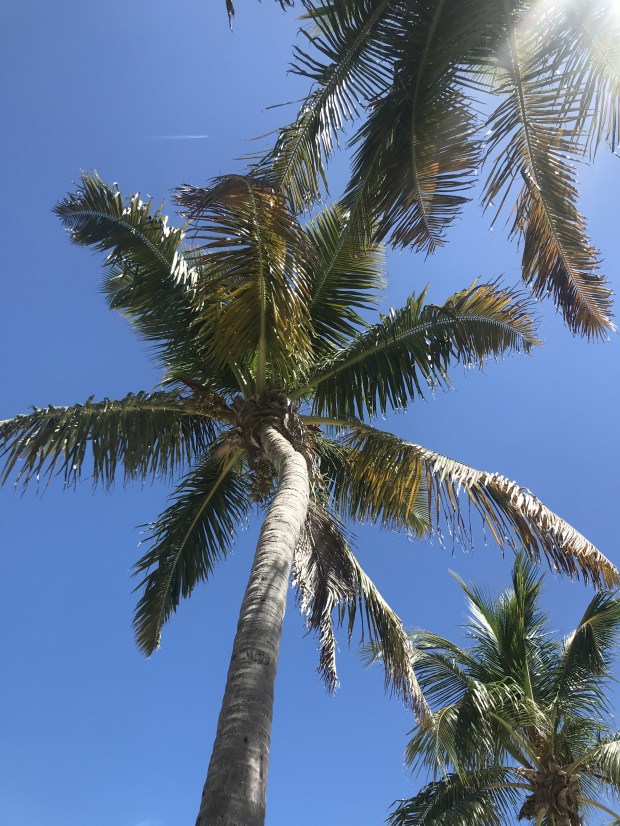
- San Juan, Puerto Rico 2. Key West, Florida
Psalm 92:12-15 “The righteous shall flourish like the palm tree: he shall grow like a cedar in Lebanon. 13 Those that be planted in the house of the Lord shall flourish in the courts of our God. 14 They shall still bring forth fruit in old age; they shall be fat and flourishing; 15 To shew that the Lord is upright: he is my rock, and there is no unrighteousness in him.
Revelation 7:9 “After this I beheld, and, lo, a great multitude, which no man could number, of all nations, and kindreds, and people, and tongues, stood before the throne, and before the Lamb, clothed with white robes, and palms in their hands;”
Just as palms were waived to praise the Messiah at his first coming, palms will be used to worship the King following his second coming!
Cedar Tree
Research Definition:
CEDAR, n. A tree. This name is given to different species of the juniper, and to a species of Pinus. The latter is that which is mentioned in scripture. It is an evergreen, grows to a great size, and is remarkable for its durability.
In Psalm 92:12, it states that the righteous shall not only “flourish like the palm tree”, but that, “they shall grow like a cedar in Lebanon!” It’s interesting to note that the temple in the Old Testament was built of cedar. In 1 Corinthians, Paul tells the Corinthian Church (also us!) that we are now the temple of God! God wants us to grow as the cedars in Lebanon because He resides inside of us! We are walking, talking temples to the world!
1 Kings 6:9-10 “So he built the house, and finished it; and covered the house with beams and boards of cedar. 10 And then he built chambers against all the house, five cubits high: and they rested on the house with timber of cedar.”
6:15-16 “And he built the walls of the house within with boards of cedar, both the floor of the house, and the walls of the ceiling: and he covered them on the inside with wood, and covered the floor of the house with planks of fir. 16 And he built twenty cubits on the sides of the house, both the floor and the walls with boards of cedar: he even built them for it within, even for the oracle, even for the most holy place.”
6:18 “And the cedar of the house within was carved with knops and open flowers: all was cedar; there was no stone seen.”
1 Corinthians 3:16-17 “Know ye not that ye are the temple of God, and that the Spirit of God dwelleth in you? 17 If any man defile the temple of God, him shall God destroy; for the temple of God is holy, which temple ye are.”
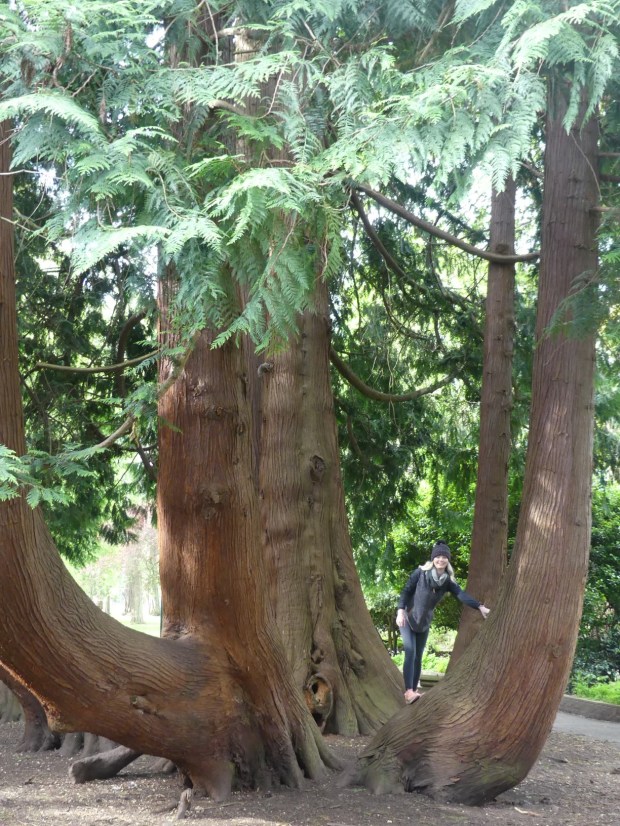
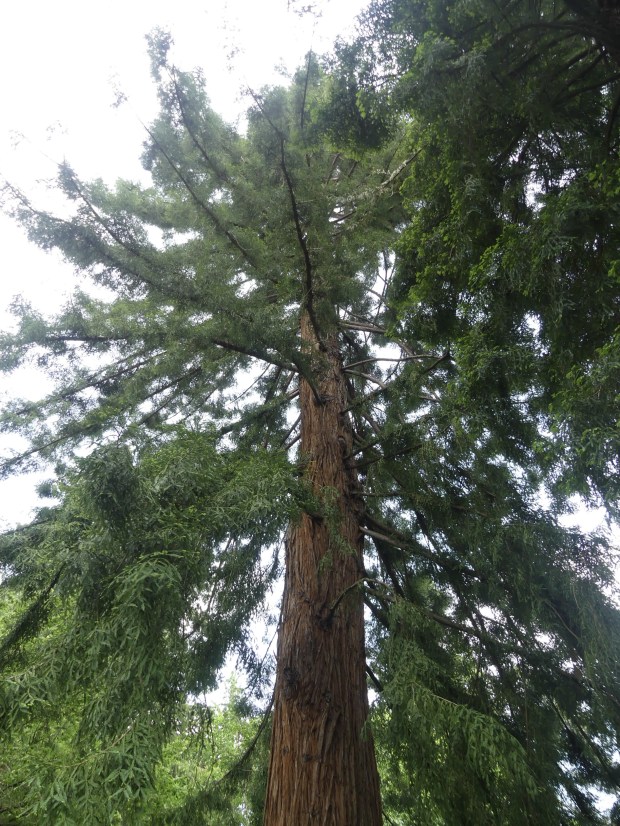
1-2. Beacon Hill Park, Victoria Canada
Though its remarkably strong and durable, the cedar is not always considered an upright (righteous) tree. In Ezekiel 31:1-18, the cedar is likened to Pharaoh who is a picture of the Assyrian, who is a type of the Antichrist (Micah 5:1-6, Isaiah 10:12-14). Ultimately, we see in Revelation 19:11-15, the Assyrian will be smote and beaten down by the voice of the Lord (Isaiah 30:31).
Ezekiel 31:3 “Behold, the Assyrian was a cedar in Lebanon with fair branches, and with a shadowing shroud, and of an high stature; and his top was among the thick boughs.”
Micah 5:1-6 “Now gather thyself in troops, O daughter of troops: he hath laid siege against us: they shall smite the judge of Israel with a rod upon the cheek. 2 But thou, Bethlehem Ephratah, though thou be little among the thousands of Judah, yet out of thee shall he come forth unto me that is to be ruler in Israel; whose goings forth have been from of old, from everlasting. 3 Therefore will he give them up, until the time that she which travaileth hath brought forth: then the remnant of his brethren shall return unto the children of Israel. 4 And he shall stand and feed in the strength of the Lord, in the majesty of the name of the Lord his God; and they shall abide: for now shall he be great unto the ends of the earth. 5 And this man shall be the peace, when the Assyrian shall come into our land: and when he shall tread in our palaces, then shall we raise against him seven shepherds, and eight principal men. 6 And they shall waste the land of Assyria with the sword, and the land of Nimrod in the entrances thereof: thus shall he deliver us from the Assyrian, when he cometh into our land, and when he treadeth within our borders.”
Isaiah 10:12-14 “Wherefore it shall come to pass, that when the Lord hath performed his whole work upon mount Zion and on Jerusalem, I will punish the fruit of the stout heart of the king of Assyria, and the glory of his high looks.13 For he saith, By the strength of my hand I have done it, and by my wisdom; for I am prudent: and I have removed the bounds of the people, and have robbed their treasures, and I have put down the inhabitants like a valiant man: 14 And my hand hath found as a nest the riches of the people: and as one gathereth eggs that are left, have I gathered all the earth; and there was none that moved the wing, or opened the mouth, or peeped.”
Isaiah 30:31 “For through the voice of the Lord shall the Assyrian be beaten down, which smote with a rod.”
Revelation 19:11-15 “ And I saw heaven opened, and behold a white horse; and he that sat upon him was called Faithful and True, and in righteousness he doth judge and make war.12 His eyes were as a flame of fire, and on his head were many crowns; and he had a name written, that no man knew, but he himself. 13 And he was clothed with a vesture dipped in blood: and his name is called The Word of God. 14 And the armies which were in heaven followed him upon white horses, clothed in fine linen, white and clean.15 And out of his mouth goeth a sharp sword, that with it he should smite the nations: and he shall rule them with a rod of iron: and he treadeth the winepress of the fierceness and wrath of Almighty God.“
The True Vine
John 15:1-8 “I am the true vine, and my Father is the husbandman. 2 Every branch in me that beareth not fruit he taketh away: and every branch that beareth fruit, he purgeth it, that it may bring forth more fruit. 3 Now ye are clean through the word which I have spoken unto you. 4 Abide in me, and I in you. As the branch cannot bear fruit of itself, except it abide in the vine; no more can ye, except ye abide in me. 5 I am the vine, ye are the branches: He that abideth in me, and I in him, the same bringeth forth much fruit: for without me ye can do nothing. 6 If a man abide not in me, he is cast forth as a branch, and is withered; and men gather them, and cast them into the fire, and they are burned. 7 If ye abide in me, and my words abide in you, ye shall ask what ye will, and it shall be done unto you. 8 Herein is my Father glorified, that ye bear much fruit; so shall ye be my disciples.”
It’s interesting to note that the word “abide” is used 7x in this passage… seven is the number of completion or perfection in the Bible! After all, God created the world in seven days. As you do your Bible studies, pay close attention when that number seven pops up!
Isaiah 61:3 says, “To appoint unto them that mourn in Zion, to give unto them beauty for ashes, the oil of joy for mourning, the garment of praise for the spirit of heaviness; that they might be called trees of righteousness, the planting of the Lord, that he might be glorified.“
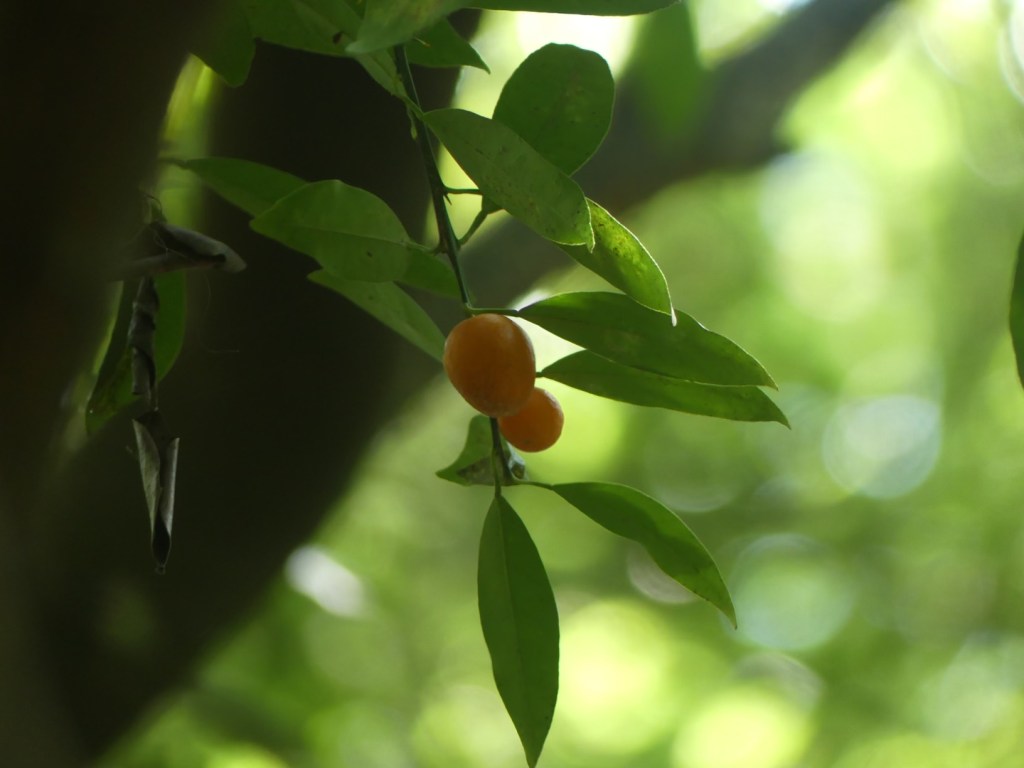
Ravine Gardens State Park, Palatka, Florida – Orange Tree
God desires for us to be trees of righteousness, rooted and grounded in love and truth, that we might glorify the Father. John 15:8 says, “Herein is my father glorified (this is Jesus speaking), that ye bear much fruit; so shall ye be my disciples.” We cannot bear fruit apart from God! In John 15:4-5, Jesus tells us that if we abide in Him, we will bear much fruit, but apart from Him, we can do nothing! A sobering thought to think, but if a tree isn’t producing fruit, is it dying? Or withering? Would the gardener maybe… curse it and cut it down? Matthew 7:16:20 says, “ Ye shall know them by their fruits. Do men gather grapes of thorns, or figs of thistles? 17 Even so every good tree bringeth forth good fruit; but a corrupt tree bringeth forth evil fruit. 18 A good tree cannot bring forth evil fruit, neither can a corrupt tree bring forth good fruit. 19 Every tree that bringeth not forth good fruit is hewn down, and cast into the fire. 20 Wherefore by their fruits ye shall know them.” The signs of the Lord’s second coming are becoming clearer and the rapture of the church is even nearer. Luke 18:8 asks a very important question, “When the son of man cometh will he find faith on the earth?” Will he find trees, producing fruit? What about you, are you more closely identified with a barren, unfruitful, broken down tree or a (THE) tree of life? Can you identify with the attributes Jesus uses to describe a tree of life?
“The fruit of the righteous is a tree of life; and he that winneth souls is wise.”
Proverbs 11:30, Proverbs 15:4, proverbs 13:12, Revelation 22:4
“A wholesome tongue is a tree of life: but perverseness therein is a breach in the spirit.”
Hope deferred maketh the heart sick: but when the desire cometh, it is a tree of life.
Blessed are they that do his commandments, that they may have right to the tree of life, and may enter in through the gates into the city.
Tree Archive: Other Trees in Scripture
- Almond – Genesis 43:11, Exodus 25:33-34, 37:19-20, Numbers 17:8, Ecclesiastes 12:5, Jeremiah 1:11
- Apple – Psalm 17:8, Proverbs 7:2,25:11, Song of Solomon 2:3-5,7:8, 8:5, Zechariah 2:8
- Algum – 2 Chronicles 2:8,9:10-11
- Chestnut – Genesis 30:37, Ezekiel 31:8
- Poplar – Genesis 30:37, Hosea 4:13
- Hazel – Genesis 30:37
- Fir – 1 Kings 5:8-10, 6:34, 2 Chronicles 2:8, 3:5, Psalm 104:17, Song of Solomon 1:17, Isaiah 14:8, 60:13, Ezekiel 27:5, Hosea 14:8, Zechariah 11:2
- Oaks – Genesis 35:8, Joshua 24:26, 2 Samuel 18:9-10,Hosea 4:13, Amos 2:9, Isaiah 1:29-30, Ezekiel 6:13, Zechariah 11:2
- Elms – Hosea 4:13
- Shittah – Judges 7:22, Isaiah 41:19
- Myrtle – Nehemiah 8:15, Zechariah 1:8-11, Isaiah 41:19, 55:13
- Pine – Isaiah 60:13, 41:19
- Box – Isaiah 41:19, 60:13
- Sycamore – 1 Kings 10:27, 2 Chronicles 1:15, 9:27, 27:28, Psalm 78:47, Luke 19:4, Isaiah 9:10
- Mustard -Matthew 13:31,17:20, Mark 4:31, Luke 13:19, 19:4
- Sycamine – Luke 17:6
- Willow – Leviticus 23:40, Ezekiel 17:5, Isaiah 15:7, 44:4, Psalm 137:2, Job 40:22,
- Pomegranate – Exodus 28:34, 39:26, Joel 1:12, Song of Solomon 6:7
- Juniper – 1 Kings 19:4-5, Psalm 120:4, Job 30:4
- Mulberry – 2 Samuel 5:23-24, 1 Chronicles 14:14-15
This blog would be older than the oldest trees, if we were to exhaust all of the trees mentioned in the Bible. I’ve listed this addendum of additional trees for your own further studies if you desire to learn more about them. I’ve also added some cross references for you to begin to compare scripture with scripture just as we’ve done today with the others. It’s interesting what you begin to uncover when you track a word through the Bible. God uses trees all over Scripture to point to specific people groups and His plan for them. I hope after reading this blog you have a more special appreciation for the trees you encounter in the world and listen more closely to the message God is desiring to be heard from these giants that have walked among us.
Mark 8:24 “And he looked up, and said, I see men as trees, walking.”
R.C

 A Closser Look
Leave a comment