
I’d like to start this blog with a question to ponder: It’s easy to praise God on the mountains, but do we praise Him in the valleys? David exclaims in Psalm 73:28, “But it is good for me to draw near to God: I have put my trust in the Lord God, that I may declare all thy works.” He says, it is good for a man to draw near to God; to trust in the Lord! But, what happens in those moments when we feel like God is so far away? When it feels like the valleys continue to stretch out for miles? When you’re stumbling in the shadows beneath the mountains? When they stand so tall you think you’ll never reach the top? Let’s take A Closser Look at how God is the same God in the valleys and the heartache, as He is on the mountains and the highs!
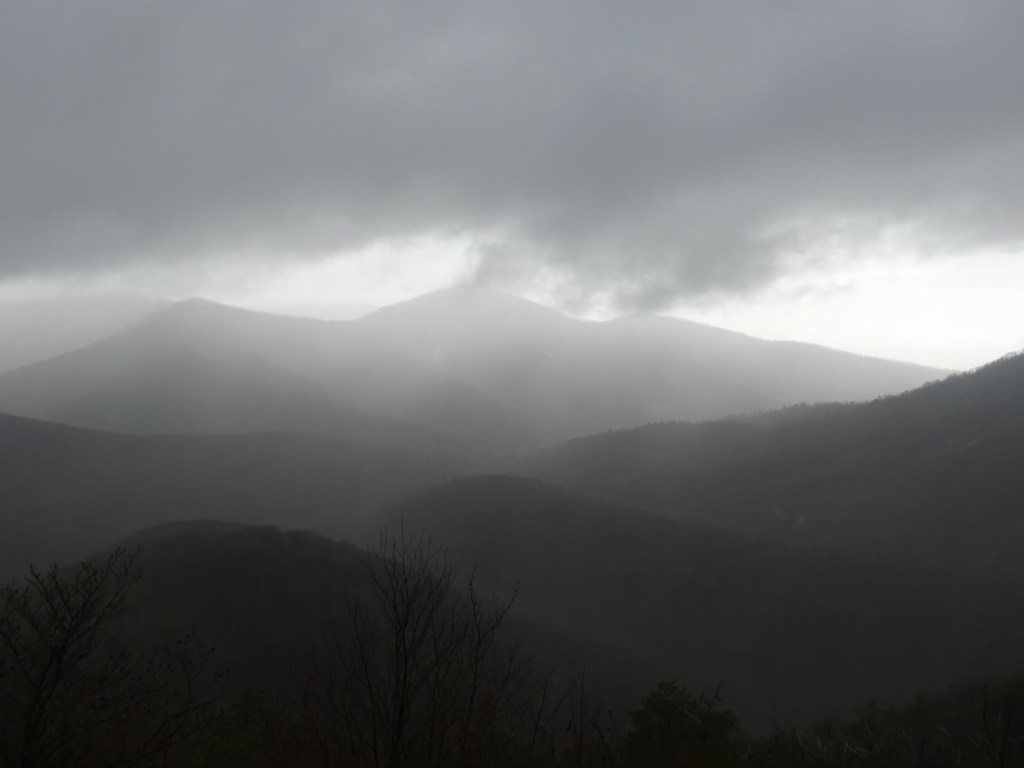
Shenandoah National Park - Mountains and Valleys
Introduction
“Mountain” is mentioned 137 times and “mountains” 177 times in Scripture. The first mention is found in Genesis 12:8, “And he removed from thence unto a mountain on the east of Bethel, and pitched his tent, having Bethel on the west, and Hai on the east: and there he builded an altar unto the Lord, and called upon the name of the Lord.” Abraham is depicted building an altar unto the Lord for the first sacrifice mentioned in Scripture. Interesting to note, in the midst of preparing the place of sacrifice, he is calling upon the name of the Lord. More to come on that later. The last mention is Revelations 21:10, “And he carried me away in the spirit to a great and high mountain, and shewed me that great city, the holy Jerusalem, descending out of heaven from God.” On the mountains, the Lord’s great glory is revealed! God had to carry John up the mountain to show him great things… likewise; the Lord has us go through valleys, and up mountains to behold great things! It is only once we walk through the valley by faith, will we be able to stand on the mountain with victory.
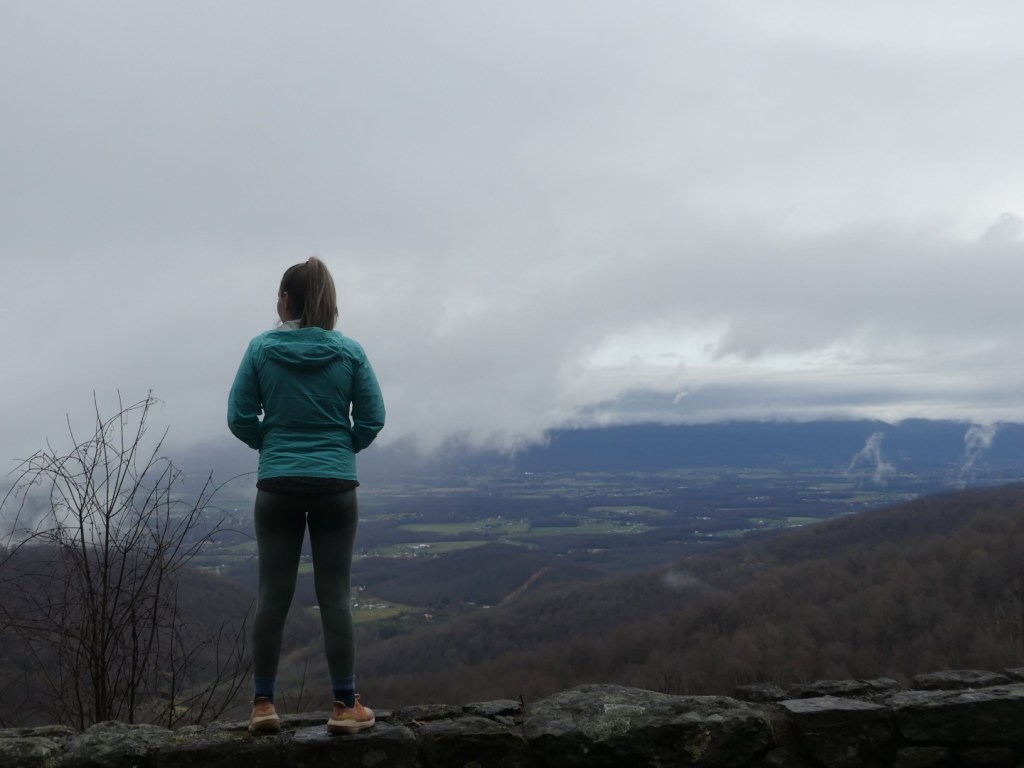
Shenandoah National Park – Skyline Drive Overlook
Key Definitions:
VAL’LEY, n. plu. valleys. L. vallis. A hollow or low tract of land between hills or mountains. A low extended plain, usually alluvial, penetrated or washed by a river.
MOUNT’AIN, n. L. adjective, montanus. A large mass of earth and rock, rising above the common level of the earth or adjacent land, but of no definite altitude. We apply mountain to the largest eminences globally, but sometimes the word is used for a large hill.
In the Valley
You have probably heard the cliche valley verse in Proverbs 23:4, “Yea, though I walk through the valley of the shadow of death, I will fear no evil: for thou art with me; thy rod and thy staff they comfort me.” Yet, to David, this verse was much more than a mere cliche’ or good for a billboard. In Psalm 23, we see David’s dependency on the Lord for restoration (v.3) and guidance (v.3), as well as his unwavering trust in the Lord’s comfort (v.4). In verse 6, we see David’s expressed confidence that he was merely passing through the valley of the shadow of death, because he knew that the Lord would guide him to his dwelling place with Him forever. It reminds me of 1 Peter 4:12-13, Peter says, “Beloved, think it not strange concerning the fiery trial which is to try you, as though some strange thing happened unto you:13 But rejoice, inasmuch as ye are partakers of Christ’s sufferings; that, when his glory shall be revealed, ye may be glad also with exceeding joy.” Remember, the Lord’s great glory is revealed on top of the mountains! But first, we must be partakers of His sufferings, in the valleys, in the shadow of death, in Biblical darkness in a Biblically dark world. We can have confidence in the exceeding joy that following God brings. Paul tells us in 2 Corinthians 4:17-18, that our light affliction, the temporal trials of this world, will last a moment, but that the eternal choices will produce a far more exceeding weight in glory.
Imagine how Jesus feels when He sees you doing the right thing knowing it wasn’t easy for you, but you still chose to honor Him.

Jasper National Park – Miette Hot Springs- Valley
Valleys in the Bible
In Genesis 14, the valley of Siddim is introduced.
Genesis 14:10 “And the vale of Siddim was full of slimepits; and the kings of Sodom and Gomorrah fled, and fell there; and they that remained fled to the mountain.”
Key Definition:
SLIME, n. L. limus. Soft moist earth having an adhesive quality; viscous mud. They had brick for stone, and slime had they for mortar. Gen 11.
The valley of Siddim represents sin and wickedness. God saw the state of Sodom and Gemorah, the two cities in which the valley dwelled, and destroyed them with fire and brimstone. God cannot and will not tolerate sin. We can learn from Lot’s wife, that once you’ve been delivered from sin in the valley, don’t look back. Turn your eyes up to God and start up the mountain.
Genesis 19:24-26 “Then the Lord rained upon Sodom and upon Gomorrah brimstone and fire from the Lord out of heaven.25 And he overthrew those cities, and all the plain, and all the inhabitants of the cities, and that which grew upon the ground. 26 But his wife looked back from behind him, and she became a pillar of salt.”
In Numbers 13, the valley of Eschol is introduced.
Numbers 13:23-24 “And they came unto the brook of Eshcol, and cut down from thence a branch with one cluster of grapes, and they bare it between two upon a staff; and they brought of the pomegranates, and of the figs.The place was called the brook Eshcol, because of the cluster of grapes which the children of Israel cut down from thence.”
Context Note:
Context is key here. What’s going on in Numbers 13? In verse 1, we see the Lord spoke to Moses! What an amazing thing when the Lord speaks! He tells Moses, “Send thou men, that they may search the land of Canaan, which I give unto the children of Israel: of every tribe of their fathers shall ye send a man, every one a ruler among them (13:2).” In verses 3-16, Moses list every man sent to search out the Promised Land. Note, that in verses 17-18, these men were instructed to “go up into the mountain, and then they could see.” Remember as we discussed previously, in Revelation 21, John had to be carried up the mountain to see! God reveals his great glory on the mountains! Carrying on, in verses 19-20, these men were to scout out the land, and the Lord says something very interesting, “And be ye of good courage, and bring of the fruit of the land. Now the time was the time of the firstripe grapes.” Bringing us to our main text in this section verses 23-24, the men came came unto the brook of Eschol, and cut down a clsuter of grapes and returned with it. The chapter wraps up with a major decision to be made. Do they obey the Lord and move forward into the land or return to the wilderness?
The valley of Eschol represents decision. The spies reported that the people dwelling in the land were strong, the cities were walled, and very great (13:28). They saw the children of Anak there, giants! Along with the Amalikites, the Hittities, the Jebusites, the Amorites; a long list of Israel’s enemies (13:29). After analyzing their enemies before them, the men corresponded back and forth with each other with sayings such as: “Surely, they are stronger than us (13:31)… surely we’re grasshoppers in their sight (13:33)?” Yet, in verse 30, in the valley of decision, Caleb says, “And Caleb stilled the people before Moses, and said, Let us go up at once, and possess it; for we are well able to overcome it.” Caleb didn’t doubt, for even a second, that God was able to bring them the victory!
In 2 Samuel 15, the valley of Kidron is introduced.
2 Samuel 15:23 “And all the country wept with a loud voice, and all the people passed over: the king also himself passed over the brook Kidron, and all the people passed over, toward the way of the wilderness.”
The valley of Kidron represents suffering. It is located just outside the east wall of the city of Jerusalem. The valley between Jerusalem and Mt. Olivet. In 2 Samuel 15, we see David fleeing Jerusalem. Absalom was gathering support to overthrow David as King and he succeeded. David understood Absalom’s favor with the people was as punishment from God for the things he had done previously throughout the book of 2 Samuel.
2 Samuel 15:13-14 “And there came a messenger to David, saying, The hearts of the men of Israel are after Absalom. 14 And David said unto all his servants that were with him at Jerusalem, Arise, and let us flee; for we shall not else escape from Absalom: make speed to depart, lest he overtake us suddenly, and bring evil upon us, and smite the city with the edge of the sword.”
Absalom’s story is one of greed and pride and tells the tragic tale of one who tries to overthrow the plan of God. However; David did still have to flee Jerusalem, undertaking the journey through the valley of Kidron (suffering/”the way of the wilderness”), but ultimately, in the end, triumphed because he was God’s chosen king. God is with us in the wilderness and the valley of suffering even still and will always provide us a way to escape. The brook of Kidron is the very same brook that Jesus passed over, when he entered the garden with his disciples the night of his betrayal, which lead to sufferings of our Savior. We all know how that turned out though! Sometimes we will have to faithfully journey through the wilderness and sufferings of this life for God to get His glory.
John 18:1 “When Jesus had spoken these words, he went forth with his disciples over the brook Cedron, where was a garden, into the which he entered, and his disciples.”
In 1 Samuel 17, the valley of Elah is introduced.
1 Samuel 17:1-3 “Now the Philistines gathered together their armies to battle, and were gathered together at Shochoh, which belongeth to Judah, and pitched between Shochoh and Azekah, in Ephesdammim. 2 And Saul and the men of Israel were gathered together, and pitched by the valley of Elah, and set the battle in array against the Philistines. 3 And the Philistines stood on a mountain on the one side, and Israel stood on a mountain on the other side: and there was a valley between them.”
The valley of Elah represents battles. The valley stood between the Philistine army and the people of Israel. The valley stretched the giant, Goliath’s words across to David, ” Why are ye come out to set your battle in array? am not I a Philistine, and ye servants to Saul? choose you a man for you, and let him come down to me.” (17:8)
1 Samuel 17:19 “ Now Saul, and they, and all the men of Israel, were in the valley of Elah, fighting with the Philistines.”
Serving the Lord comes with many battles. There are many that come against Him, therefore; will come against you. However, we see in verse 19, the men of Israel, though they were afraid, they fought in the valley with confidence because they knew God was with them.
1 Samuel 17:23 “And as he talked with them, behold, there came up the champion, the Philistine of Gath, Goliath by name, out of the armies of the Philistines, and spake according to the same words: and David heard them.”
The battles will be fierce and seem like there will be no end to the suffering. When you think you’ve just overcome, the world, Satan will send out his “champion” fighters against you. Yet, you must continue to fight the good fight. Mortify the fear of man, with the fear of God.
1 Samuel 17:37 “David said moreover, The Lord that delivered me out of the paw of the lion, and out of the paw of the bear, he will deliver me out of the hand of this Philistine. And Saul said unto David, Go, and the Lord be with thee.”
1 Samuel 17:45 “Then said David to the Philistine, Thou comest to me with a sword, and with a spear, and with a shield: but I come to thee in the name of the Lord of hosts, the God of the armies of Israel, whom thou hast defied.”
David knew he had the victory. He didn’t need fancy armor or a sharp sword. He was fighting in the name of the Lord and he could not lose! Let this remind us of Romans 8:31, “What shall we then say to these things? If God be for us, who can be against us?” when we’re in the valley of battle.
1 Samuel 17:49 “And David put his hand in his bag, and took thence a stone, and slang it, and smote the Philistine in his forehead, that the stone sunk into his forehead; and he fell upon his face to the earth.”
In Joshua 7, the valley of Anchor is introduced.
Joshua 7:24-26 “And Joshua, and all Israel with him, took Achan the son of Zerah, and the silver, and the garment, and the wedge of gold, and his sons, and his daughters, and his oxen, and his asses, and his sheep, and his tent, and all that he had: and they brought them unto the valley of Achor. 25 And Joshua said, Why hast thou troubled us? the Lord shall trouble thee this day. And all Israel stoned him with stones, and burned them with fire, after they had stoned them with stones. 26 And they raised over him a great heap of stones unto this day. So the Lord turned from the fierceness of his anger. Wherefore the name of that place was called, The valley of Achor, unto this day.“
The valley of Anchor represents punishment. The valley is situated northwest of the city of Jericho on the border of the tribe of Judah. Its name means, “trouble” or “affliction” because it was there that the Israelites executed Achan and his household in the fierceness of the Lord’s anger. Achan disobeyed the Lord’s command after the Israelites experienced great victory at the battle of Jericho, when he kept some of the spoils for himself that God ordered to be consecrated back to Himself (Joshua 6:17-19).
Joshua 6:17-19 “And the city shall be accursed, even it, and all that are therein, to the Lord: only Rahab the harlot shall live, she and all that are with her in the house, because she hid the messengers that we sent. 18 And ye, in any wise keep yourselves from the accursed thing, lest ye make yourselves accursed, when ye take of the accursed thing, and make the camp of Israel a curse, and trouble it. 19 But all the silver, and gold, and vessels of brass and iron, are consecrated unto the Lord: they shall come into the treasury of the Lord.”
Following the battle of Jericho, Israel faced a much weaker opponent, the city of Ai, however, they fell in defeat. It later was revealed to Joshua that the reason for their defeat lay in the spoils Achan had hidden from the Lord (Joshua 7:12-13).
Joshua 7:12-13 “Therefore the children of Israel could not stand before their enemies, but turned their backs before their enemies, because they were accursed: neither will I be with you any more, except ye destroy the accursed from among you. 13 Up, sanctify the people, and say, Sanctify yourselves against to morrow: for thus saith the Lord God of Israel, There is an accursed thing in the midst of thee, O Israel: thou canst not stand before thine enemies, until ye take away the accursed thing from among you.”
Achan and his family were stoned and burned together in the valley of Anchor. We learn from this that one person was disobedient, but all of Israel was held responsible and suffered. We are the body of Christ and our actions affect each other (1 Corinthians 12:12).
1 Corinthians 12:12 “For as the body is one, and hath many members, and all the members of that one body, being many, are one body: so also is Christ.”
Even though punishment had to take place, Israel dealt with it, and the Lord’s favor was returned. We see later on in the story, the valley of Anchor, became “a door of hope.” Hosea 2:15 says, “And I will give her her vineyards from thence, and the valley of Achor for a door of hope: and she shall sing there, as in the days of her youth, and as in the day when she came up out of the land of Egypt.”
In Joshua 15, the valley of Hinnom is introduced.
Joshua 15:8 “And the border went up by the valley of the son of Hinnom unto the south side of the Jebusite; the same is Jerusalem: and the border went up to the top of the mountain that lieth before the valley of Hinnom westward, which is at the end of the valley of the giants northward:”
The valley of Hinnom represents death and Hell. It is the valley where the idolatrous Jews burned their children alive, sacrificing them to Moloch and Baal. It later became the receptacle of the city and fire was ever burning. Jeremiah 19:6 refers to it as the “valley of slaughter!” Why? Well, the last mention of the valley of Hinnom is found in Jeremiah 32:35, “And they built the high places of Baal, which are in the valley of the son of Hinnom, to cause their sons and their daughters to pass through the fire unto Molech; which I commanded them not, neither came it into my mind, that they should do this abomination, to cause Judah to sin.” In the valley of Hinnom, lay the path through fire. Furthermore, it is interesting to note that the Greek word Hinnom, pronounced, Gehenna, is seen used by our Lord only in instances that denote future punishment (Hell).
Matthew 23:33 “ Ye serpents, ye generation of vipers, how can ye escape the damnation of hell?”
Luke 12:5 “But I will forewarn you whom ye shall fear: Fear him, which after he hath killed hath power to cast into hell; yea, I say unto you, Fear him.”
Matthew 5:22 “But I say unto you, That whosoever is angry with his brother without a cause shall be in danger of the judgment: and whosoever shall say to his brother, Raca, shall be in danger of the council: but whosoever shall say, Thou fool, shall be in danger of hell fire.”
On the Mountain


Jasper National Park – Skyline Trail Summit
With all this talk of valleys, you’re probably ready for the good news. Once we’ve made it through the valley, we can ascend the mountain! We see the first mountain mentioned in Scripture in Genesis 8, Mount Ararat.
Genesis 8:4-5″ And the ark rested in the seventh month, on the seventeenth day of the month, upon the mountains of Ararat. 5 And the waters decreased continually until the tenth month: in the tenth month, on the first day of the month, were the tops of the mountains seen.”
It is the mountain where Noah’s ark rested, and God painted the promise of the rainbow in the sky. In verse 5, God ceased the waters to rise again. It’s easy to get overwhelmed by the waters, as we’re going through the valleys, but know that the Lord promises deliverance and rest on the mountain.
Genesis 8:20-22 “And Noah builded an altar unto the Lord; and took of every clean beast, and of every clean fowl, and offered burnt offerings on the altar. 21 And the Lord smelled a sweet savour; and the Lord said in his heart, I will not again curse the ground any more for man’s sake; for the imagination of man’s heart is evil from his youth; neither will I again smite any more every thing living, as I have done.22 While the earth remaineth, seedtime and harvest, and cold and heat, and summer and winter, and day and night shall not cease.
In Genesis 22, we see a similar account of God’s faithfulness. God commanded Abraham to sacrifice his son Isaac, on Mount Moriah.
Genesis 22:1-3 “And it came to pass after these things, that God did tempt Abraham, and said unto him, Abraham: and he said, Behold, here I am. 2 And he said, Take now thy son, thine only son Isaac, whom thou lovest, and get thee into the land of Moriah; and offer him there for a burnt offering upon one of the mountains which I will tell thee of. 3 And Abraham rose up early in the morning, and saddled his ass, and took two of his young men with him, and Isaac his son, and clave the wood for the burnt offering, and rose up, and went unto the place of which God had told him.”
It is on this mountain, we see Abraham prove his faithfulness and devotion to God, and God blessed him, providing a substitute lamb in the place of Isaac.
Genesis 22:11-14 “And the angel of the Lord called unto him out of heaven, and said, Abraham, Abraham: and he said, Here am I. 12 And he said, Lay not thine hand upon the lad, neither do thou any thing unto him: for now I know that thou fearest God, seeing thou hast not withheld thy son, thine only son from me. 13 And Abraham lifted up his eyes, and looked, and behold behind him a ram caught in a thicket by his horns: and Abraham went and took the ram, and offered him up for a burnt offering in the stead of his son. 14 And Abraham called the name of that place Jehovahjireh: as it is said to this day, In the mount of the Lord it shall be seen.”
Biblical Definition:
Je-ho’-va-ji’-re (yahweh yir’-eh, “Yahweh sees”) or “The Lord will provide”
It is easy to get overwhelmed in trials and let doubt creep in, but remain faithful to God; He will always provide!
In Deuteronomy 34, Moses sees the promised Land from Mount Nebo (Pisgah). After years of wandering in the wilderness, he finally saw the land that the Lord promised.
Deuteronomy 34:1-5 “And Moses went up from the plains of Moab unto the mountain of Nebo, to the top of Pisgah, that is over against Jericho. And the Lord shewed him all the land of Gilead, unto Dan, 2 And all Naphtali, and the land of Ephraim, and Manasseh, and all the land of Judah, unto the utmost sea, 3 And the south, and the plain of the valley of Jericho, the city of palm trees, unto Zoar. 4 And the Lord said unto him, This is the land which I sware unto Abraham, unto Isaac, and unto Jacob, saying, I will give it unto thy seed: I have caused thee to see it with thine eyes, but thou shalt not go over thither.5 So Moses the servant of the Lord died there in the land of Moab, according to the word of the Lord.”
Sometimes it’s hard to keep the promises of God at the forefront of our hearts as we’re journeying through the wilderness. When it seems we’re always coming up empty-handed of those promises. Though Moses never got to enter the land, he must’ve felt relief having seen the fruit of his labor finally in front of him. Likewise, we must continue to run the race, steadfast and unmovable, always abounding in the work of the Lord, because He promises it is not for vain glory.
1 Corinthians 15:58 “Therefore, my beloved brethren, be ye stedfast, unmoveable, always abounding in the work of the Lord, forasmuch as ye know that your labour is not in vain in the Lord.“
In Acts 1, the Lord ascends up into glory, from the Mount of Olives.
Acts 1:9-12 “And when he had spoken these things, while they beheld, he was taken up; and a cloud received him out of their sight. 10 And while they looked stedfastly toward heaven as he went up, behold, two men stood by them in white apparel; 11 Which also said, Ye men of Galilee, why stand ye gazing up into heaven? this same Jesus, which is taken up from you into heaven, shall so come in like manner as ye have seen him go into heaven. 12 Then returned they unto Jerusalem from the mount called Olivet, which is from Jerusalem a sabbath day’s journey.”
It is on this mountain, Jesus ascended to the right hand of the Father, where he awaits his return for his people. In Acts 1:11, we’re reminded not to be weary, but to look for the coming of the LORD! In the same manner, He went, the same manner He will come again! It’s hard to remember this in the valleys, but on the mountains the vision is clear.
Colossians 4:2 “ Continue in prayer, and watch in the same with thanksgiving;”
Hebrews 9:28 “So Christ was once offered to bear the sins of many; and unto them that look for him shall he appear the second time without sin unto salvation.”
In Zechariah 14:4, we learn that the same mountain the Lord ascended into glory, will be the same mountain he descends again unto, this time in all his glory!
Zechariah 14:4 “And his feet shall stand in that day upon the mount of Olives, which is before Jerusalem on the east, and the mount of Olives shall cleave in the midst thereof toward the east and toward the west, and there shall be a very great valley; and half of the mountain shall remove toward the north, and half of it toward the south.”
Conclusion
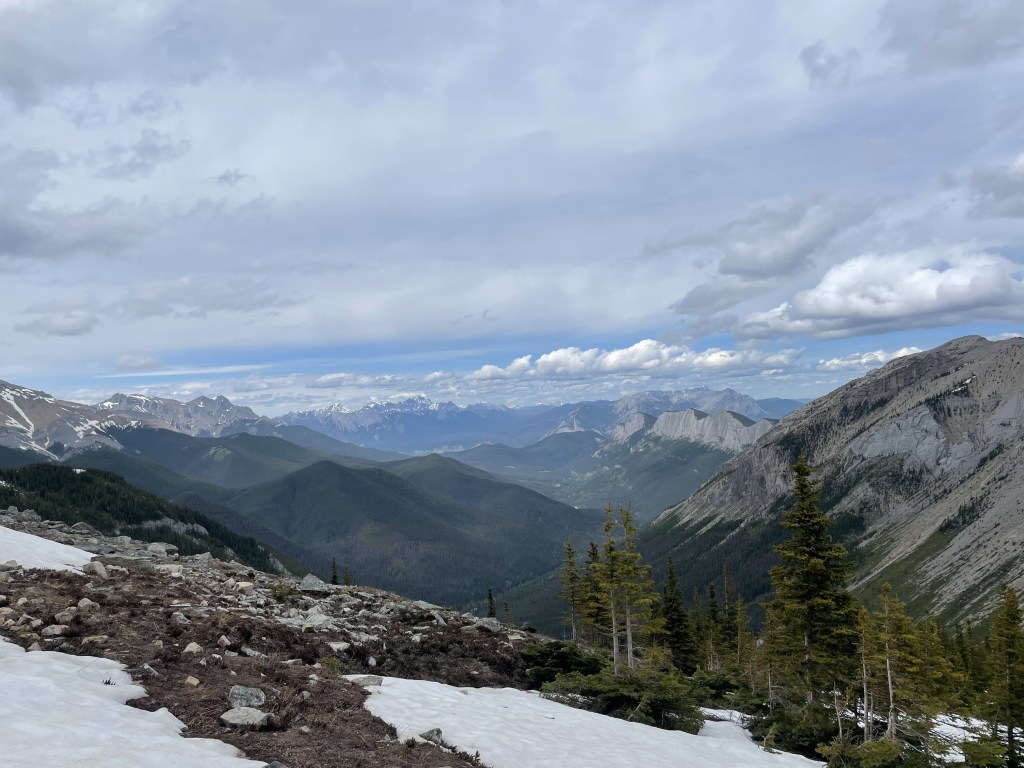
Jasper National Park – Skyline Trail
I would like to close with an excerpt from one of my favorite songs, God, You’re So Good:
And should this life
Bring suffering
Lord, I will remember
What Calvary has bought for me
Both now and forever
God, You’re so good
God, You’re so good
God, You’re so good
You’re so good to me
I hope this blog helps you remember that God is still good in the valleys, in the battles, in the sufferings, and even in death. He is faithful and will always guide you out of the valleys to stand on the mountains with Him. Trust His timing and promises.
Romans 8:38-39 “For I am persuaded, that neither death, nor life, nor angels, nor principalities, nor powers, nor things present, nor things to come. 39 Nor height, nor depth, nor any other creature, shall be able to separate us from the love of God, which is in Christ Jesus our Lord.”
1 Kings 20:28 says, “And there came a man of God, and spake unto the king of Israel, and said, Thus saith the Lord, Because the Syrians have said, The Lord is God of the hills, but he is not God of the valleys, therefore will I deliver all this great multitude into thine hand, and ye shall know that I am the Lord.”
What do you believe? Is He God on the mountains alone, or is he God of the valleys all the same?
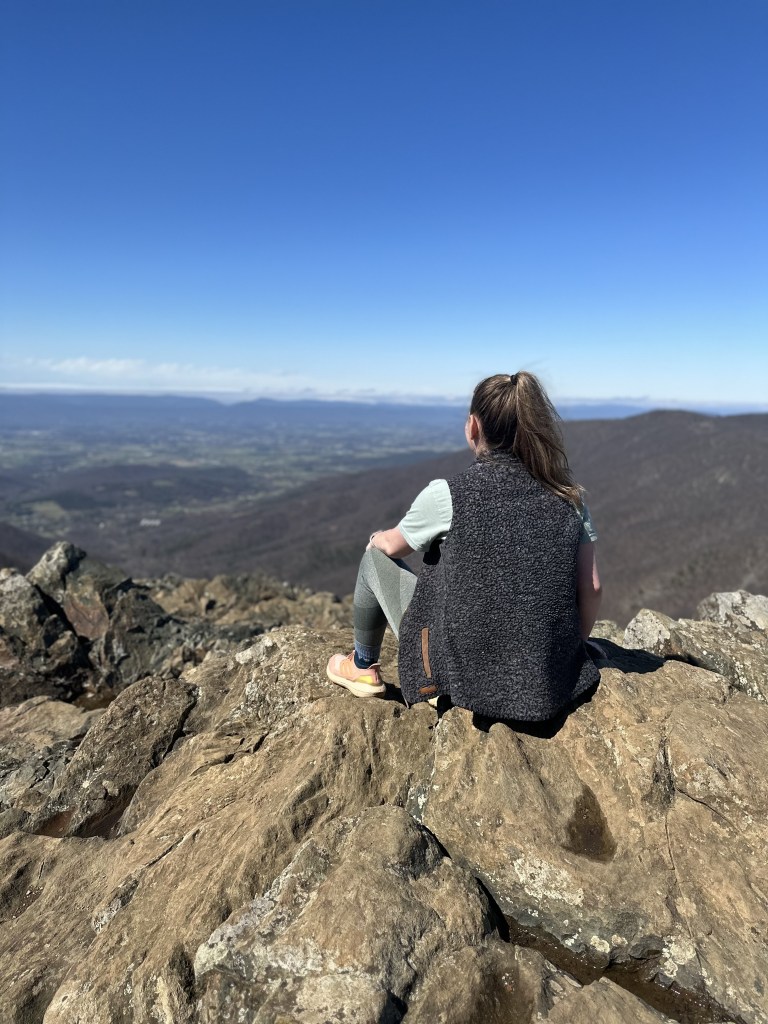
Shenandoah National Park – Hawksbill Submit

 A Closser Look